

"The end may justify the means as long as there is something that justifies the end."
Leon Trotsky
"The end may justify the means as long as there is something that justifies the end."
Leon Trotsky
Leon Trotsky, born on November 7, 1879, was a pivotal figure in the Russian Revolution and one of the foremost Marxist theorists of the 20th century. As a key leader in the Bolshevik movement, Trotsky played a crucial role in the October Revolution of 1917, which led to the overthrow of the Provisional Government and the establishment of the Soviet Union. His contributions to the revolution and the early Soviet state were profound, particularly in his role as the founder and commander of the Red Army, which was instrumental in securing Bolshevik victory during the Russian Civil War.
One of Trotsky's most memorable and often-cited quotes is: "The end may justify the means as long as there is something that justifies the end." This statement encapsulates Trotsky's pragmatic approach to revolutionary politics, reflecting his belief that the morality of actions must be judged in the context of their outcomes. For Trotsky, the success of the revolution and the establishment of a socialist society were paramount, and he argued that extraordinary and sometimes harsh measures could be justified if they were necessary to achieve these ends.
This quote is often interpreted as highlighting the ethical dilemmas faced by revolutionaries who believe that the pursuit of a greater good—such as the overthrow of an oppressive regime or the establishment of a just society—can necessitate difficult and morally ambiguous decisions. Trotsky himself was involved in many such decisions, particularly during the Russian Civil War, where he led the Red Army with a combination of strategic brilliance and ruthless discipline. His leadership helped the Bolsheviks to survive and ultimately prevail against the White forces and foreign intervention, securing the future of the Soviet state.
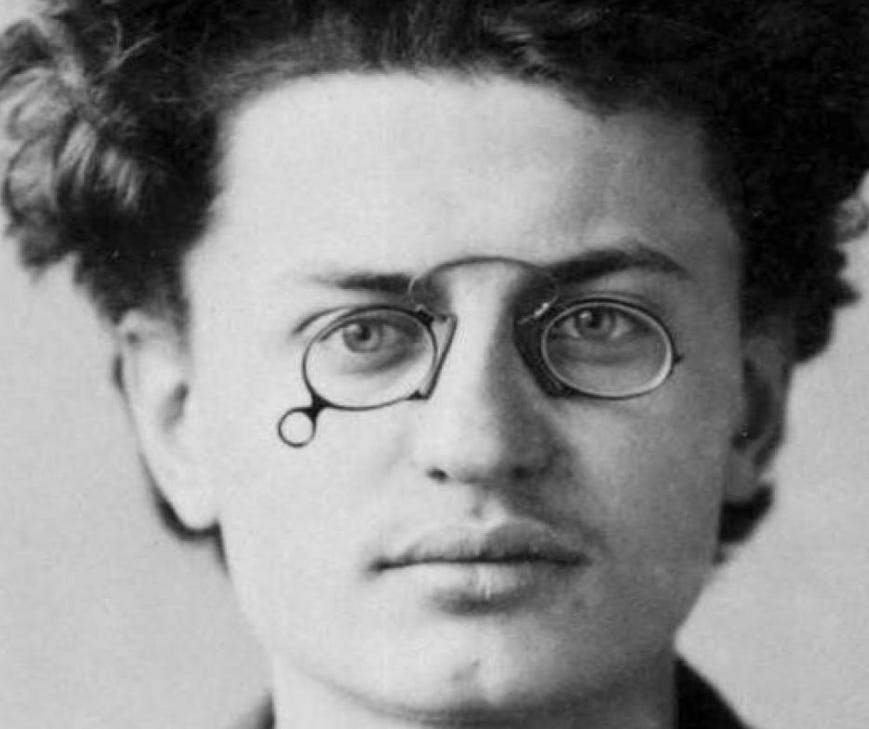
However, this approach also made Trotsky a controversial figure, both during his lifetime and in historical assessments. His belief in the necessity of harsh measures, including the use of violence, to achieve revolutionary goals has been the subject of much debate. Critics have argued that such justifications can lead to the erosion of moral principles and the perpetuation of authoritarian practices, a critique that became particularly pointed as Stalin rose to power and increasingly sidelined Trotsky.
After Lenin’s death in 1924, Trotsky’s rivalry with Joseph Stalin became a defining feature of Soviet politics. While Trotsky advocated for "permanent revolution" and internationalist policies, Stalin promoted "socialism in one country" and worked to consolidate power domestically. This ideological and personal conflict led to Trotsky's expulsion from the Communist Party, his exile from the Soviet Union in 1929, and eventually his assassination in Mexico in 1940 by a Soviet agent.
Despite the tragic end to his life, Trotsky's writings and ideas have continued to influence socialist and revolutionary movements worldwide. His quote about the ends justifying the means serves as a powerful reminder of the ethical complexities inherent in revolutionary politics. It challenges us to consider the balance between ideals and practical necessities, and to reflect on the moral implications of the actions taken in the pursuit of a greater good. Trotsky’s legacy remains a subject of intense debate, but his contributions to Marxist theory and revolutionary practice are undeniable, making him a towering figure in the history of the 20th century.